
IN CONVERSATION WITH ART HISTORIAN KEVIN CHILDS
4 minute read
Setting the Scene with Kevin Childs
Kevin Childs – art historian, lecturer and screenwriter – is a specialist in LGBTQ+ history. His works, which encompasses artists and poets, the struggle to end discriminatory laws, and the AIDS pandemic, is focussed on redressing LGBTQ+ history. Awarded fellowships at the Dutch Institute in Florence and the British School in Rome, he has contributed to courses at London’s legendary Victoria and Albert Museum and taught on Art History and Visual Culture BA courses at Exeter University. Childs has been published in a slew of prestigious media outlets including The Independent, The Times and Huffington Post.
Keen to learn more about Kevin’s fascinating career, we caught up with him to find out what exciting projects are up next, where he looks for inspiration and what travel means to him.
Tell us about your career so far.
I’m an art historian by academic training. I completed my PhD at the Courtauld Institute in 2010 and have been teaching Italian Renaissance art history at the Victoria and Albert Museum and Exeter University since then. I also write regularly for The Independent on various aspects of culture with an emphasis on LGBTQ history, which is a passion of mine as these stories have not always been told, accurately or sensitively, if at all. I’ve recently returned to an older passion – acting. In the 1990s I was an actor, and I’m now working as a screenwriter across various projects with a co-writer. This is feels like a very exciting road for me to travel. My first degree, at Oxford, was in English Literature, and so I’ve always wanted to write. I’ve always written but combining visuals with words is a new thing for me.
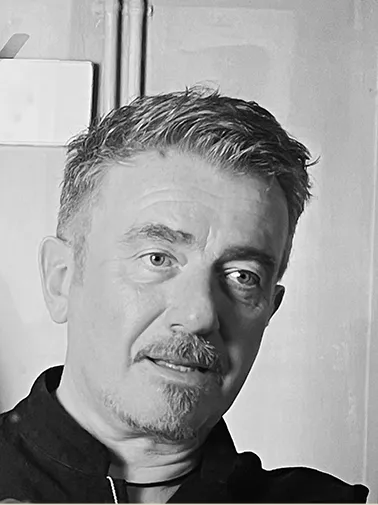
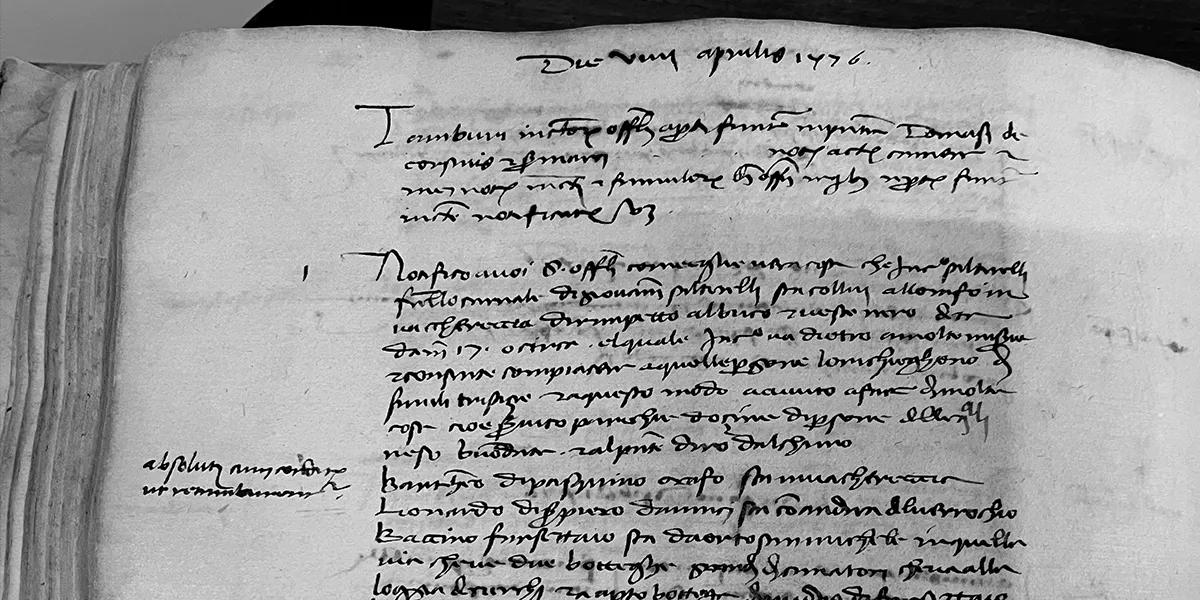
Dr Kevin Childs, left, and Ledgers of the Office of the Night (1478) indictment of Leonardo da Vinci for sodomy, Archive di Stato in Florence, right.
“SO MUCH OF HISTORY – AND I INCLUDE RECENT HISTORY SUCH AS THE AIDS CRISIS IN THIS – HAS BEEN IGNORED OR TWISTED TO FIT TRADITIONAL NARRATIVES, I FEEL THERE’S A NEED TO REDRESS THE BALANCE.”
When do you feel most inspired?
When something unexpected happens. This often occurs when I’m travelling – I might encounter a new and beautiful place, or it might be an unusual sensation, and this can take place almost anywhere. For example, the Florence Journey: the Office of the Night, includes a visit to the State Archives of Florence, which became an unexpected highlight - just seeing the names of Leonardo and Botticelli in old documents connected with accusations of same-sex intimacy was strangely humbling and saddening: I could understand the pain involved. Equally, looking into an obsidian mirror recently gave me the strangest sensation of being in some distant place in the past, which is hard to explain. I have a very visual imagination and tend to construct narratives around images."
Do you feel a responsibility as an Art Historian and Screenwriter to uncover and portray forgotten narratives?
Definitely. I have a responsibility to consider what could be termed forgotten narratives in what I do. So much of history – and I include recent history such as the AIDS crisis in this – has been ignored or twisted to fit traditional narratives, I feel there’s a need to redress the balance. This is the case not only with LGBTQ stories but with women’s stories, which are often omitted from older histories, or children’s experiences of historical events and cultural movements. The Office of the Night journey which looks at the hidden sexual and social histories of Florence in the Renaissance, is one example that explores this.
Another area I’ve looked at is the fact that even a towering figure such as Michelangelo hasn’t escaped what could be called ‘straight-washing’. There were no editions of his poetry published in his lifetime, for example. His great-nephew was the first to share his work after his death, but sadly his great-nephew decided to alter many of his love poems to make the apparent beloved female rather than male.
It was only in the late 19th century when the original manuscripts were found that the balance was redressed.
My late partner, who died suddenly in 2021, was a passionate believer in equality and that included equality of narratives. I’ve had the huge privilege of setting up the first Chair in the History of Sexualities at Oxford University – a programme that is dedicated to his name that includes a series of yearly lectures. This is an example of how we begin to redress the balance.
The same is true of the scripts I’m currently writing. We’re looking at strong female and gay characters in period narratives as well as in contemporary drama. This isn’t just out of a sense of justice, they are also brilliant, enriching stories that are more than novelties, shining a new light on the past, but also demonstrate how adversity and prejudice can be overcome.
At The Luminaire we believe in the power of travel to nurture personal growth, how is this important to you?
To me, travel is searching for something. Socrates once said, “the unexamined life is not worth living”. If we’re not looking, if we’re not asking questions of the world around us, if we’re not challenging ourselves with new experiences and new cultures, we’re not really living, we’re just existing.
JOURNEY
A QUEER HISTORY OF RENAISSANCE FLORENCE
Co-curated by art historian Kevin Childs, raise the curtain on Renaissance Florence to reveal a clandestine chapter in the city's history where same-sex relations convened with high art and intellectual discourse.
SEND ME TAILORED TRAVEL INSPIRATION
© THE LUMINAIRE, 2026 | GROWTH TRAVEL GROUP FC038589